
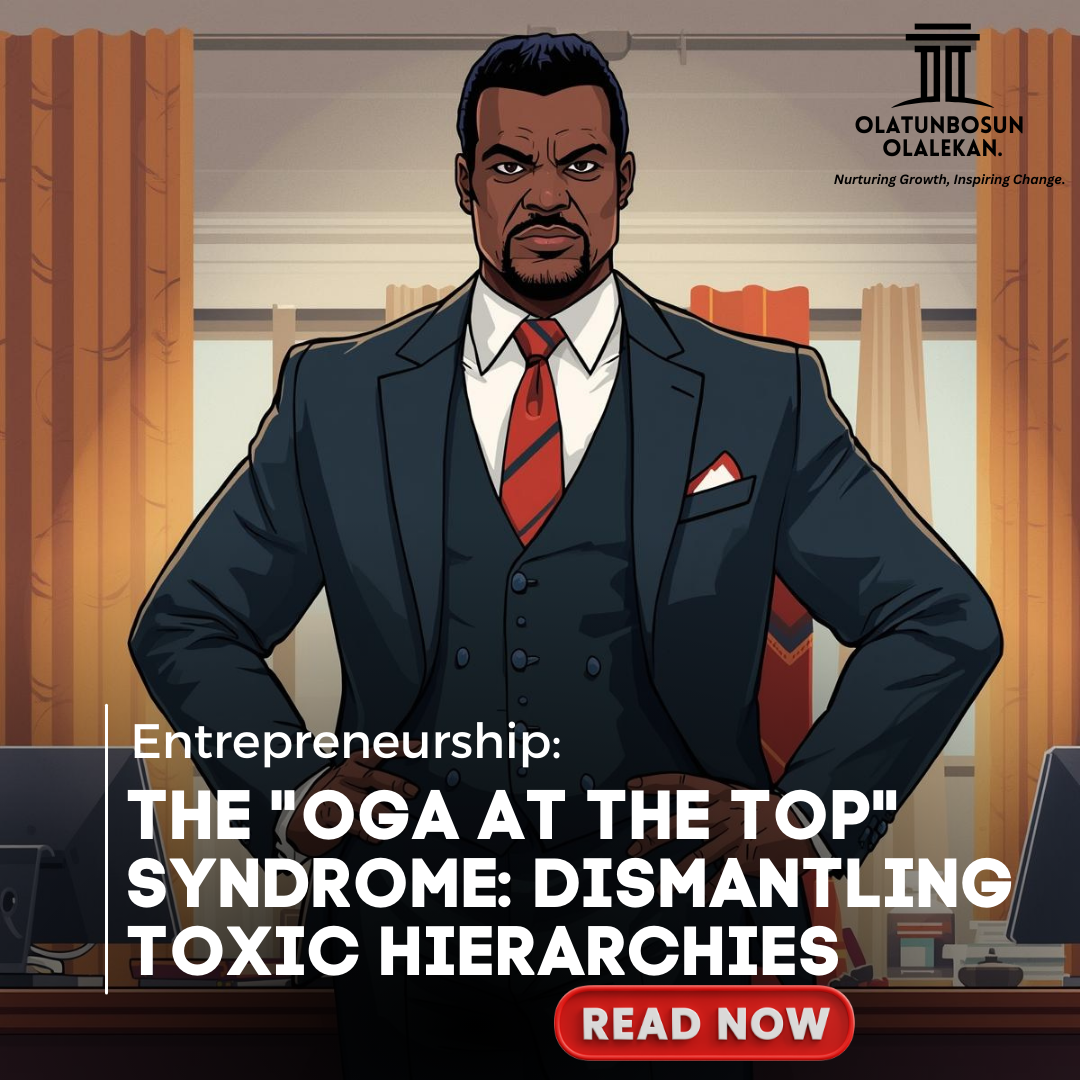

In many Nigerian organisations, there is a tangible shift in atmospheric pressure when the owner walks into the room. It is a culture where the CEO is not just a strategic leader but a demigod whose word is law, whose mood dictates the fiscal quarter, and whose approval is required for even the purchase of office stationery. We culturally refer to this figure as the “Oga at the Top,” and while it commands social respect, I, as a management consultant, am here to tell you it is becoming a silent killer of business growth. The “Oga at the Top” syndrome creates a single point of failure: the boss. When one person must clear every decision, the organisation moves only as fast as that one person can read emails. In a digital global economy that rewards speed and agility, this centralised bottleneck is not a sign of power; it is a structural weakness that competitors will exploit.
The most dangerous side effect of this toxic hierarchy is the “Silence of the Competence”. In my consulting sessions with SMEs, I often see brilliant junior staff sitting on game-changing ideas or spotting critical risks, yet they remain silent because our culture conflates questioning the strategy with disrespecting the elder. When a business environment demands that staff say “Yes, Sir” or “Yes, Ma” even when the ship is heading for an iceberg, you do not have a team; you have an audience. True leadership is not about being the loudest voice in the room; it is about aggregating the collective intelligence of the room. If your employees are only executing your instructions and never challenging your assumptions, you are paying for their hands but wasting their brains.
The solution requires a delicate balance between our rich cultural values and modern management science. Dismantling toxic hierarchies does not mean we abandon our culture of respect; it means we must distinguish between “Positional Authority” and “Functional Authority.” You can still be the “Oga” and receive the respect due to your station, but you must democratise decision-making. We need to transition from the “Big Man” model, where the leader is the sole hero, to the “Servant Leader” model, where the leader’s job is to remove obstacles for the team. The most successful Nigerian MSMEs I have studied are those where the founder has the confidence to say, “I don’t know; what does the data say?” or “I trust your judgement on this; go ahead.”
The test of a true “Oga” is not how many people tremble in your presence, but how well the business functions in your absence. If your business collapses the moment you go on vacation or step away for a week, you have not built a company; you have merely created a high-stress job for yourself. Legacy is not built on control; it is built on empowerment. It is time to step off the pedestal, empower your middle management, and realise that the strongest leaders are not those who hold onto power but those who distribute it effectively to build a system that outlasts them.